Tuesday, August 18, 2009

Scavenger Hunt From Hell (No, I did not enjoy this exercise).

1. What is the weight of the world's biggest pumpkin? How long did it take to grow?

I used Ask Jeeves for the answer to this question. I found a website called Pumpkin Nook, and apparently the World's Biggest Pumpkin weighs 1689 pounds! This record was set in 2007. I could not find ANYWHERE where it says how long it took to grow. NOT COOL.

2. What is the best way (quickest, most reliable) to contact Lily Allen?

Hmm...i have a strong (ie. 99.93% chance) feeling that this is not the correct answer. But I would have to say Twitter. Not that she would actually ever reply to you, but in an interview i watched she said that she occasionally replies to peoples tweets if she feels the urge. I actually follow her on Twitter so that was how I knew this answer...although i went and searched her website (Lily Allen) and it seems to think that Twitter or other social networking sites is the best way to contact Lily! This would have to be the most reliable answer. I looked at a few websites which claimed to have celebrity directories...didn't seem overly reliable.

Here is one such site (found after searching Yahoo.com):

http://www.contactanycelebrity.com/trial/do/celebrityView?name=Lily+Allen

3. What is the length of a giraffe's tongue?

Okay so I searched this question on Ask Jeeves and just by looking at the results, I am going to take a wild guess and say approximately 18 inches..The following sites all back me up:

http://www.ask.com/bar?q=length+giraffe%27s+tongue&page=1&qsrc=0&ab=0&u=http%3A%2F%2Fwww.sandiegozoo.org%2Fanimalbytes%2Ft-giraffe.html

http://www.ask.com/bar?q=length+giraffe%27s+tongue&page=1&qsrc=0&ab=1&u=http%3A%2F%2Fwiki.answers.com%2FQ%2FWhat_is_the_average_length_of_a_giraffe%27s_tongue

http://wiki.answers.com/Q/How_long_is_a_giraffe%27s_tongue

http://www.chacha.com/question/what-color-is-a-giraffe%27s-tongue

All of these were accessed on the 19th August 2009.

4. How would you define the word 'glycomics'? In your own words, what does it really mean ? What does the term 'seagull manager' refer to?

According to Wiktionary Glycomics is: "the study of the biological role of carbohydratesoligosaccharides) and glycosides." (H-Ref 1) As far as putting that in my own words goes... I've got nothing. I read another definition on Reference.com and got no further. In fact I got more confused. I'm relatively certain that it has something to do with carbohydrates and sugar levels. Maybe. I don't know.

I do however, understand the 'Seagull Manager' reference! I looked up 'seagull manager' on ninemsn.com and it took me to Wikipedia which told me that the term 'seagull manager' refers to managers that "fly in, make a lot of noise, dump on everyone, then fly out." (H-Ref 2)Ken Blanchard's 1999 book Leadership and the One Minute Manager...well, thats what they say anyway.) (Wikipedia stole that from

5. What was David Cronenberg's first feature film? Which of his films Had 'Blondie' in it?

This question was easyyyyy for me, especially compared to the others. I went straight to trust IMDb (The Internet Movie Database) and searched David Cronenberg. His first film was Transfer which he directed in 1966.

ANNNNDDD Blondie, otherwise known as Deborah Harry was in Cronenberg's film Videodrome, made in 1983. To find this I had a quick squiz (totally a word) at the films Cronenberg made until I found the one with Debbie Harry in it! Success!

6. When was the original 'Hacker's Manifesto' written?

The original Hacker's Manifesto was written in 1986. For this question I thought Wikipedia would be a good search engine, and it was! These two sites confirm this answer too, I found them searching Yahoo.

http://www.mithral.com/~beberg/manifesto.html

http://adimitrov.net/main/docs/manifesto.html

Both accessed on 24/08/09.

7. Why do phone numbers in Hollywood films start with '555'?

So I searched this very question on Yahoo and I found this site guardian.co.uk which provides a few different answers! I'm not sure if there is supposed to be one concrete answer, but eh, speculating is more fun. A lot of people seem to think it's because in the US, for directory inquiries you call 555-1212. Apparently there are quite a few people stupid enough to call the numbers that pop up in movies from time to time, and I guess this avoided bugging the poor people who actually have those as their home phone number. Using a false one would make sense, but it kind of lacks authenticity. I hope that makes sense...

8. What is the cheapest form of travel from the Gold Coast to Sydney?

Look, this question is a big fat pain in the you know where. I'm sure it would be cheap to walk , or ride a bike. But if we are being realistic flying is going to be a pretty cheap way to travel. I recently got a flight to Sydney for $52 which is WAY cheaper than what it would cost to hire a car and then pay for petrol etc etc etc. As you can see this question has made me mad. For cheap flights check Virgin Blue or Jetstar. If you sign up for their emails, you can find out about cheap flights without searching for years on their websites too.

Perhaps I am just crap at searching without Google. I have made peace with this fact. Google and I are just very good friends and no Yahoo is going to come between us.

9. What song was top of the Australian Pop Charts this week in 1965?

So I kind of cheated and searched this on Wikipedia... Although the other answers I have from Wikipedia weren't originally searched through there. So therefore this is legit. The answer to this question is "Help/I'm Down" by The Beatles; it was the top of the charts for 8 weeks! I searched the ARIA charts on Wiki and followed the links from there til I found THIS week in 1965...it was pretty foolproof.

10. Which Brisbane band includes Stephen Stockwell on keyboards and vocals?

Stephen Stockwell plays in a band called No Fixed Address. I found this out by searching "Stephen Stockwell plays keyboard" on Google. YES I CAVED OKAY. I couldn't find the answer anywhere else. Is using the Internet not about being able to find and access things easily? Well that is why I use the Internet. I was going to try and lie to you but Catholic guilt would eat away at me. So there. Anyway, found the answer on Revolution Rock.

I answered these questions out of order by the way, so if you can see my mood change randomly between questions that is why.

H-Ref 1- Wiktionary: Glycomics

http://en.wiktionary.org/wiki/glycomics

Accessed 19th August 2009


H-Ref 2- Wikipedia: Seagull Manager

http://en.wikipedia.org/wiki/Seagull_manager

Accessed 19th August 2009

Sunday, August 16, 2009

Just had to share this...

This is one of the digital shorts The Lonely Island made for the MTV Movie Awards 2009. It's sooooo good. Featuring Andy Samberg (Hot Rod, I Love You Man, Saturday Night Live), Will Ferrell (Anchorman)and JJ Abrams (Star Trek, Alias).

Lecture Notes Week 3: The Language of the Screen

Understanding Film/Cine-Speak


We should think of shots as a way of answering a question; shots as words (what? where? why? how? when? who?)


(Image Sourced From: http://andrewsidea.files.wordpress.com/2008/11/vlcsnap-6593687.png)


VLS/WS: Very long shot/Wide Shot - A framing in which the scale of the object shown is very small; a building, landscape or crowd of people will fill the screen. (Bordwell & Thompson)This shot (as well as the CU) helps us to answer the when? question...time is apparently quite a difficult thing to capture on screen. It's important to show the passing of time and what this means for our beloved/hated characters.


(Image Sourced From: http://images.teamsugar.com/files/users/1/13839/27_2007/license-1.preview.jpg)

LS: Long Shot - A framing in which the scale of the object shown is small; a standing human figure would appear nearly the height of the screen. (Bordwell & Thompson)
This helps to answer the where? question, mainly at the beginning of a scene; aka the establishing shot (pretty self-explanatory).

MLS: Medium Long Shot - A framing at a distance that makes an object about four or five feet high appear to fill most of the screen vertically. (Bordwell & Thompson)

(Image Sourced From: http://www.virginmedia.com/images/1keira-gal-pride.jpg)

MS: Mid Shot - A framing in which the scale of the object shown is of moderate size; a human figure seen from the waist up would fill most of the screen. (Bordwell & Thompson)

This show helps to answer the what? question by showing your subject performing an action.

(Image Sourced From: https://blogger.googleusercontent.com/img/b/R29vZ2xl/AVvXsEi1itwat5pc-P83zgSP0vmaML09tvFGEtGZLYuKVafpZRUHep1JSLhyiX5N1rPPqEwmNGPt6DFM_aQzq3gJjah7NYwwOF50IgVD_5proGLEmJooklRPSRp2uZH7q3L0rHq3GFKZIltzqQ0/s400/Jim+Halpert.jpg)

MCU: Medium Close-Up - A framing in which the scale of the object shown is fairly large; a human figure seen from the chest up would fill most of the screen. (Bordwell & Thompson)

A single MCU or a series of CU's can explain an event and answer the how? question.


(Image Sourced From: http://blog.nj.com/entertainment_impact_tv/2009/04/large_office-michael-scott-paper.jpg)
CU: Close-Up - A framing in which the scale of the object shown is relatively large. ; most commonly a person's head seen from the neck up, or an object of a comparable size that fits most of the screen. (Bordwell & Thompson)

This shot helps us understand the question of who? by showing a character in detail. (Also see VLS/WS and MCU for more questions that the CU helps us to answer).
(Image Sourced From: http://i36.tinypic.com/33lktpg.jpg)


[Example is the bottom-left quarter of the image]

BCU: Big Close-Up - a shot taken very close to the subject (closer than would be necessary for a close-up), revealing extreme detail. (H-Ref 1)

This shot can help us answer the question of why? because it helps to reveal more about a character and their actions. Josh explained that this question is usually directly tied to a character as opposed to an action.

As an aside, I would just like to say I am not overly fond of Twilight. However, this was the best example I could find of a BCU. I swallowed a rather large amount of pride in putting this picture up. This is totally irrelevant but I have to have my say!

(Image Sourced From: http://thumbs.dreamstime.com/thumb_350/1231129082bb75Cg.jpg)

ECU: Extreme Close-Up - A framing in which the scale of the object shown is very large; most commonly, a small object or a part of the body. (Bordwell & Thompson)


Note about this image: I also struggled to find an example I liked of an ECU, but I thought this was appropriate as Jenna Fischer loves cats. (Jenna plays Pam on The Office). I'm not creepy, you guys! I found out because I read her blog. You can follow her blog on MySpace: Pam/Jenna.


So, this afternoon I am going to watch an episode of The Office and show how the shots used answer the questions: who? what? where? why? how? when? Stay Tuned!

REFERENCES:
Bordwell, David; Thompson, Kristin (2008) Film Art: An Introduction Ed. 8. New York: McGraw-Hill.

H-Ref 1: Film/Editing Terms

Accessed on the 18th August 2009.

All other info comes from the notes I took in Josh's Week 3 Lecture.

Tuesday, August 11, 2009

My Video with Kelly and Michelly


Here is the much anticipated video of Kelly, Michelly and Me! We made a three minute one a while ago but it was too long to upload (MORE LIKE TOO AWESOME!) so we made this short version.

Peace OUTTTTTT

What do these mean? ECU, WS, MS?

Please, come on my journey of discovery as I attempt to discover what ECU, WS and MS stand for.

Let us being with ECU.

Typing ECU Language Screen into Google. No good results.

http://www.acronymgeek.com/ECU

http://www.google.com.au/search?hl=en&q=ecu+computer&btnG=Search&meta=

http://www.abbreviations.com/ECU

http://www.ebooksquad.com/search/ECU+programing+language

http://gandolfs1stblog.blogspot.com/ FOUND IT!!!

So with Kelly's help I ended up finding it on the above blog of one of my fellow students! HOWEVER, THIS ANSWER WAS ON THE FIRST PAGE I VISITED!!! I am clearly too stupid to know that that was the answer. Yes, big fat loser am I. I even did introduction to SCREEN analysis last semester. How embarrassing.

OKAY, so definitions :

ECU: stands for extreme close up. "Extreme Close Up ("ECU" or "XCU"): The shot is so tight that only a fraction of the focus of attention, such as someone's eyes, can be seen." (http://en.wikipedia.org/wiki/Close-up)
WS: stands for wide shot, but better known as a long shot. "In photography, film and video, a long shot (sometimes referred to as a full shot or a wide shot) typically shows the entire object or human figure and is usually intended to place it in some relation to its surroundings." (http://en.wikipedia.org/wiki/Long_shot)

MS: stands for mid shot or medium shot. "In film, a medium shot is a camera shot from a medium distance." (http://en.wikipedia.org/wiki/Medium_shot)

EXAMPLES:

So I had to use this darling picture of BJ Novak (Ryan the Temp from The Office. I've got to keep the theme going you guys! Don't think I'm crazy, cause I'm totalllllly not at all.)

Wide (Long Shot):


(http://www.givememyremote.com/remote/wp-content/uploads/2006/04/BJ_ew.jpg)

Mid/Medium Shot:


(http://vanderwalt.ca/mediashare/websites/staff/dvanderwalt/filmandmedia/shotcomposition/_images/twoshot_1.jpg)

Extreme Close Up:


(http://ferdyonfilms.com/deren_02.jpg)

Lecture 2: History of the Computer aaaaaaaand the Internet!

The History of the Computer:


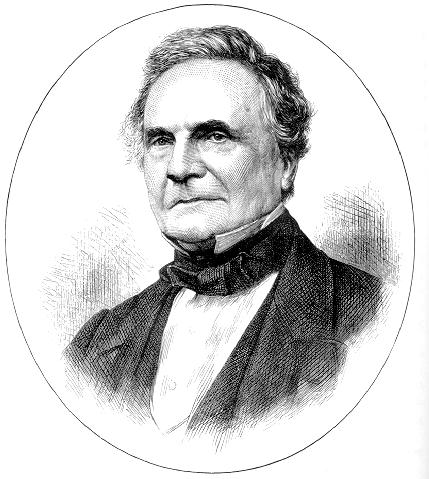
1791: Charles Babbage Born. Conceived difference engine in 19th Century. "He sketched out the logical structure of the modern computer". Also conceived the analytical engine.


1815: Ada Byron born. Conceived the idea of a machine that can do all the things we now do on computers everyday!


1912: Alan Turing Born. "In 1948, he moved to the University of Manchester to work on the Manchester Mark 1, then emerging as one of the world's earliest true computers." (H-Ref 3)


1950's: Computer first commercially produced by IBM.


1965: Gordon Moore put forward Moore's law: "the capacity of microchips doubles every two years".


1970's (early): Think-tank developed concepts such as mouse, GUI (Graphical User Interface) and pull-down menus.


1975: First PC Released. Bill Gates writes language called BASIC for the Altair so that it could be used for word processing, basic accounting, games AND started MICROSOFT.


1978: Apple II launched at West Coast Computer Fair.


1980: Steve Jobs and Steve Wozniak make enough money of Apple to never have to work again (heaven on earth!).


1985: Steve Jobs resigns from Apple due to conflicts with the board of directors. Apple's fortunes are not so great from here on in... (H-Ref 4)


1998: Steve Jobs returns and Apple's fortunes turn around.


1991: Linus Torvalds builds his own operating system. GNU/LINUX.
1995: "Windows '95 was launched by Bill Gates & Microsoft. Unlike previous versions of Windows, Windows '95 is an entire operating system - it does not rely on MS-DOS (although some remnants of the old operating system still exist)." (H-Ref 6)

2001: "Windows releases XP" (H-Ref 6)


2001: "Apple released Mac OS X" (H-Ref 7)


2005: "Apple announces they are going to use Intel processors in upcoming Macintosh computers" (H-Ref 7)


2006: Apple Computer introduces the MacBook Pro, their first Intel-based, dual-core mobile computer, as well as an Intel-based iMac. (H-Ref 7)


2007: Microsoft Corporation launches Windows Vista more than 5 years after their last major, new operating system, Windows XP, was released. (H-Ref 7)


Note: All information found in this section, aside from what is already referenced, was found at H-Ref 1.

The History of the Internet

Definition of the Internet:

"The Internet is a global system of interconnected computer networks that use the standardized Internet Protocol Suite (TCP/IP). It is a network of networks that consists of millions of private and public, academic, business, and government networks of local to global scope that are linked by copper wires, fiber-optic cables, wireless connections, and other technologies. The Internet carries a vast array of information resources and services, most notably the inter-linked hypertext documents of the World Wide Web (WWW) and the infrastructure to support electronic mail, in addition to popular services such as online chat, file transfer and file sharing, online gaming, and Voice over Internet Protocol (VoIP) person-to-person communication via voice and video."
(H-Ref 2)


1960's: "idea of the internet conceived by RAND corporation (while considering nuclear war situations) Group of researchers in the US already working on the concept of "Packet Switching which is essentially breaking down messages into small chunks and transmitting them from one computer to another." (H-Ref 1)

1965: "First Network Experiment: Directed by Larry Roberts at MIT Lincoln Lab, two computers talked to each other using packet-switching technology." (H-Ref 5)

1989: "100 000 hosts on the Internet." (H-Ref 5)

1990's: Concept of the WWW emerged "as people generally began to see the potential for computers to communicate with each other as a matter of course. The Web merges the techniques of (i) internetworking and (ii) hypertext to make an easy-to-use, but powerful, global system that shares all information accessible as part of a seamless hypertext space." (H-Ref 1)

2000: "Fixed wireless, high-speed internet technology is now seen as a viable alternative to copper and fiber optic lines placed in the ground." (H-Ref 5)

2005: "YouTube launches." (H-Ref 5)

2006: "There are an estimated 92 million Web sites online." (H-Ref 5)

2007: "1.114 billion people use the Internet according to Internet World Stats." (H-Ref 5)


Seemingly Important Point:
1. "It is important to understand that the internet is not the same thing as the web. The web is just one part of the broader internet which includes many other things as well as the Web. If this sounds confusing it helps if we think of the internet as a collection of computers." (H-Ref 1)


BIBLIOGRAPHY:

H-Ref 1 - Nct09 Blog, Stephen Stockwell

http://nct09-gc.blogspot.com/2009/08/short-history-of-computing-and-internet.html

Accessed on the 12th August 2009

H-Ref 2 - Wikipedia

http://en.wikipedia.org/wiki/Internet

Accessed on the 12th August 2009

H-Ref 3 - Wikipedia


http://en.wikipedia.org/wiki/Alan_Turing

Accessed on the 12th August 2009

H-Ref 4 - Wikipedia

http://en.wikipedia.org/wiki/Steve_jobs

Accessed on the 12th August 2009


H-Ref 5 - Webopedia: Brief Timeline of the Internet

http://www.webopedia.com/quick_ref/timeline.asp

Accessed on the 17th August 2009

H-Ref 6 - A Brief History of Computing Timeline

http://trillian.randomstuff.org.uk/~stephen/history/timeline.html

Accessed on 17th August 2009

H-Ref 7 - Wikipedia: Timeline of Computing

http://en.wikipedia.org/wiki/Timeline_of_computing_2000-2009

Accessed 17th August 2009